Articles and comment. Assed has reported from Pakistan, Kashmir, Somalia, Libya and Palestine. He writes on current affairs and issues relating to radicalism and terrorism. He is currently in Burma reporting on the the persecution of the Rohingya and other Muslims.
The opinions on this website are my own and do not represent that of any news organisation.
Police are treating a
blast near a mosque in Tipton, West Midlands, as a terrorist incident.
The blast near the
Kanz-ul-Iman took place around 1:00 pm and police are
currently at the scene.
Residents reported
finding debris in their gardens including nails.
One resident, wishing
not to be named said, “My house is about 40 yards away from the mosque.”
“I saw the cloud of
smoke after the extremely loud bang.”
“The backdoor to the
living room was open when the explosion happened, a nail landed inside our
living room.”
The Friday prayers at
the mosque were moved back because of the Muslim holy month of Ramadhan, where
Muslims refrain from food and water during daylight hours.The mosque would have been full during
Friday prayers but people had not begun to arrive at the time of the blast.
Asked if they saw
anything suspicious leading up to the explosion the resident told me “ I saw
three young white men in their mid 20’s walking away from the mosque.”
“They were well kept,
were wearing sunglasses and shorts, they looked suspicious because they were
peering into the houses as they walked past”
“They just looked out
of place.” She added
Local councillor,
Richard Johnson said on his twitter, “Thankfully no-one was hurt
in suspected Tipton nail bomb blast near mosque. “
The explosion is
reported to have taken place in the Mosque car park.Surrounding roads remain closed off in what police say is a
‘precautionary measure’.Some residents
have also been evacuated from their homes as police forensic teams are on the
scene investigating the incident.
Police spokesman
Gareth Cann, told media that the Police have called in the army to make sure
the area is safe adding “this is possibly an act of terrorism.” He cited a
number of factors, including the explosion, location and the fact that police
discovered debris in the surrounding area.
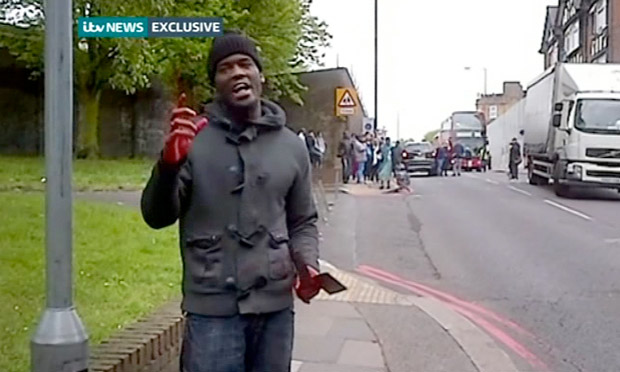
The murder in Woolwich
has shocked everyone, no one was prepared for such a killing on the streets of
the UK.The response has been of
disgust and condemnation.This
incident has raised some questions that politicians and the mainstream media
have conveniently dodged.I am disgusted and appalled by what has
taken place, but why should I have to condemn or apologise for such a crime, it
had nothing to do with me.
Why is it that Muslims
and Muslim organisations are expected to condemn and distance themselves from
the actions of two individuals?Why is it that Muslim organisations do not even need to be prompted to
condemn; they are readily condemning actions that have nothing to do with
them.There has been no attempt by
Muslim organisations to discuss the causes of the attack, no attempt to
question the mainstream media narrative that imposes labels on Muslims.
I was born and brought
up in a majority Muslim area of Birmingham.I have travelled the country and the world.I have come across thousands of
Muslims, spoken, debated and challenged opinions.Radicalisation is not a religious problem, it is a problem
of society, and specifically, in this case, British society.
Muslim leaders have
been scared into silence.Prevent
officers visiting mosques and community leaders frighten them.They are told that if Muslims display
any political opinions outside the mainstream then they are extremists, that if
they do not inform on them, that their bank accounts can be frozen, mosques
closed and they could face prison.Muslims are afraid.Muslim organisations and leaders are
subservient to the state, scared to mention foreign policy as a radicalising
factor just in case they are harangued for justifying the murder.It has got to such a state that we do
not even realise that our minds have been conditioned through years of media
misrepresentation and widespread Islamophobia.Questioning the reason for a murder does not mean condoning
or justifying it.Condemning
something that has nothing to do with you feeds into the narrative that this is
a Muslim problem, that this is something that the Muslim community are
responsible for, at least in part.
In turn so-called
Muslim leaders stifled debate and discussion in mosques, too afraid to discuss
anything political.For too long
they have played a subservient role to the state, asking for a seat at the
table and hoping for crumbs to be passed to them.I have not met a Muslim that has condoned the actions in
Woolwich, but let’s not ignore what radicalises.British foreign policy radicalises, double standards
radicalise, making Muslim youngsters feel like their opinions are not
legitimate radicalises, stifling debate and discussion radicalises, not giving
people a conduit to vent their opinions and frustrations radicalises, a lack of
identity in Britain radicalises, we are either extremists or moderates.
We are told that
Muslims are equal citizens in this country but the reality is something very
different.If we say we don’t
drink, we are labelled anti-social or not willing to integrate, if we drink we
are labelled moderate, if a Muslim wears a hijab, she is oppressed, if she
doesn’t she is liberated, if we express an opinion outside of the mainstream
narrative, we are angry, if we join a mainstream political party we are
passionate, if we sing the praises of the British establishment we are liberals,
if we object to foreign policy we are extremists or Islamists.I for one am fed up of this apologetic
and subservient tone.I have
nothing to apologise for, I should not be asked to condemn the actions of two
men that had nothing to do with me just as a white man should not be asked to
condemn the murders committed by Anders Brevik or for the violent actions of
the English Defence League.
Have Muslims not
proved their worth to this country?Muslims have bled for this country during WWI and WWII, they have fought
for Empire, they have served as colonial subjects, they have waved the flags,
sang the anthems and anglicised their names –Mo and Ed.But still we are not accepted; we still
hear ‘Muslim appearance’ in the mainstream media, which basically means
non-white, not one of us.
I am privileged, I
went to university, I had an abundance of left-wing white friends that never
questioned my opinions because of my religion or ethnicity, that accepted me as
an equal, and made me feel that I had a place in society, we shared our
politics as well as our battles.
My parents still fear
that I will be arrested for writing and expressing an opinion as a
journalist.I have been inundated
with calls since the attack from Muslims that are afraid of a backlash, one
even asked me if there would be ethnic cleansing.I told them not to be afraid because I had faith in the
British people to see through the fog that politicians and mainstream media
perpetuate.
I was born here, I am
British, I am standing in the tradition that says that my opinion is just as
valid as anyone else’s, that I have a right to object to the hypocritical
treatment vented out to Muslims without being accused of condoning or
justifying such attacks. There are Muslims that will disagree with me, that is
fine, we must understand that we are not a homogenous group, Anjum Choudry and
his motley crew do not represent me, neither do the Muslim Council of Britain
with their 400 affiliated mosques run by old men in committees. Unfortunately non-Muslims in the
public sphere represent my views more than our so-called Muslim leaders.
To be ‘leaders’,
senior Muslim figures must lead.Whilst politicians and the media carry on scapegoating Muslims, a true
community leadership must face up to the reality of foreign policy and
suppression of Muslim communities over the last decade, and call it out for
what it is.
Copyright: You are free to share (copy, distribute, transmit), remix (adapt) and make commercial use of this article. Please just credit to Assed Baig, include link to AssedBaig.com
Reports of what actually took place in the Central Myanmar town of Meiktila are still emerging. IDPs are beginning to speak out and tell the world of what they witnessed with their own eyes.
“They beat them in front of me. I was watching. I can still see it.” Noor Bi, is crying as she describes the moment when she saw her husband and brother murdered in front of her eyes as she fled Meiktila.
The mob out numbered the police and they were unable to protect the Muslim minority of the town. The 26-year-old is now a widow with a three-year-old son. As she told her story and what she witnessed, the people around her in the make shift IDP camp now set up in the grounds of a Muslim school in Yindaw, began to cry. Grown men sobbed at hearing her ordeal.
“They beat them and beat them, they were still alive when they threw my husband and brother in the fire. They were burnt alive.” Tears stream down her face as she continues to relay her account.
“Once they had finished, they told us to bow down to them. We bowed down towards Mecca, but they started to beat us.” Noor pauses and then seems reluctant to tell the next part of her ordeal.
“The police asked the monks and the mob to stop beating us and that they would ensure that we would bow down to the monks.” The faces of the other people listening clearly show their disgust at what she described.
“They made us worship them. That is why we lived on that day,” she looks to the ground, not wanting to make eye contact with me or anyone else. No one blames her; Muslims only bow down in prayer to God, but this was life or death, the IDPs around her, men and women, young and old, all of them Muslim, understand this more than anyone.
The monks that asked to be worshipped were young. Noor Bi was even beaten whilst she was holding her three-year-old son causing her to drop him. Her son was saved by a Buddhist woman who sheltered him and took him to safety.
The fifteen women were put on a police truck and taken to a police station. The police asked them to stay quiet, as they needed to go back and rescue others.
Noor Bi’s account is not isolated. Sixteen-year-old Muhammed (name changed for his safety) saw his friends killed in front of his eyes.
The violence started on the 20th March after an apparent dispute at a gold shop led to mob attacks against the Muslim minority in Meiktila. Muhammed and his fellow students went into hiding when Buddhist monks burnt down their boarding school. It was 9:30am the following morning when the police arrived in three trucks to escort the students to safety.
Muhammed and the students were asked by the police to get on the police trucks. There was only one problem though; they had to get to the trucks and a mob stood between them and safety.
“I felt sick the last time I recalled this.” His eyes look tired, he tells me he is not sleeping well and had a nightmare only last night. “The Buddhists refused to let us walk through their area, even with the police escort. We had to try and walk around, there were not enough police to protect us.” His eyes are full of pain.
“We had to put out hands over our heads and bow our heads and pay homage to the monks as we walked,” Muhammed raises his hands above his head joining his palms together to illustrate what they were forced to do. “They began to attack us. I saw my friends murdered.”
“They dragged Abu Bakr away as he attempted to get on the truck, and began to beat him, he was still alive when they threw him in the fire. He stood back up, and then they stabbed him in the stomach with a sword, twisting it whilst it was in him.” He takes a deep breath, his hands tensed and grasping each other.
“I can still see and hear it.” His family stands around attempting to give him support, his uncle rubs his hand down his back, trying to ease the suffering this young boy has had to endure. Muhammed told me that there were a few new faces within the mob; he described them as having long red hair.
100 people began that walk to the police trucks. By the end of it 25 students and four teachers were murdered, beaten, stabbed and burnt alive. 71 survived but mentally scared for life. There are pictures that corroborate the accounts.
There are many other eyewitness accounts of the horror that took place in Meiktila, they are slowly reaching the world. We must ensure they are not lost. Copyright: You are free to share (copy, distribute, transmit), remix (adapt) and make commercial use of this article. Please just credit to Assed Baig, include link to AssedBaig.com and consider supporting@rj_fund http://rohingyajournalismfund.blogspot.co.uk/ a crowd funded project that made this report possible.
Rakhine driving around Sittwe June 2012 at time of first attack.
We are being followed. Everyone we speak to is then in turn spoken to. We are being watched, our movements, what we buy, what we say, what we eat. The regime is scared of something.
In Sittwe where the Rohingya Muslims were murdered last year the attitude towards us has further darkened. Some of the local Rakhine women, who first received us with smiles and waves, possibly thinking we were tourists, now have dropped all the niceties after word has gotten around that we are visiting the Rohingya IDP camps.
I have become increasingly aware that my skin complexion makes me seem less of a Westerner than others around me, especially now that I am being associated with the Muslim Rohingya.
We took a walk to the local internet café in the Rakhine part of town where we are staying. That night as we walked a man said “Why don’t you guys go down here,” pointing towards a side road. The last remaining Rohingya ward, surrounded by barbed wire and guns, is in that direction. We politely said “No, thank you,” and moved on. On the way back he said it again, looking me directly in the eyes, but this time adding, “The Muslims are down there.”
Further up the road a man pulls up next to us whilst we are walking back to our guesthouse and aggressively asks, “Where are you going?” We answer, “Our guest house,” and he continues to speak aggressively and coldly.
“Come with me!” he demands. At any point I was expecting him to pull out a police badge or even attack. We say, “No thank you,” he drives off and shouts some words that we do not understand.
Associating with Rohingya is very dangerous. The local Rakhine do not like it, and neither do the authorities. The Rohingya are who we are here to see.
Last night as I returned to my hotel, a man signalled at me whilst talking to another man and called me a “Rohingya”. The implication is clear; the brown guy is a Muslim, Rohingya, the same as the people they massacred and continue to persecute today. I see men riding on the back of motorcycles at night whilst carrying long blades, the same blades, maybe, that were involved in the hacking of the Rohingya, including children, last year.
Men on motorcycles follow us. Thuggish looking men, overly fed and built, wait outside our hotel, constantly informing someone on the phone of when we leave and come back. Men sit close to us when we have dinner. Our hotel that advertises wifi internet connection suddenly has connection problems, we are unable to contact the outside world via the net. What are they preventing from getting out?
Local Rakhine, who attempt to help the Rohingya, or try and bring goods into the camp markets face being ostracised. Last week, three such Rakhine were beat up in the Rakhine part of town then forced to wear and parade around with signs calling them traitors. They are considered traitors or ‘kalar’ lovers. Kalar is a racist term that is used for the Rohingya and other Muslim minorities in Burma.
Although the attitude towards us has changed, it is nothing compared to what the Rohingya face. I am a foreigner. I was born In England and because of that I am a British citizen with all the rights and protection that come along with my nationality. The British consulate is about an hour’s plane ride away and could be on hand to help if need be. I have the option of flying out; I have the protection and privilege that a foreigner usually has.
The Rohingya have no such protection. They cannot leave their areas as the military impose curfews and roadblocks. The Rohingya cannot fly out of the airport; they don’t have passports or travel documents. They have to pay and apply to the police and military for official permission to leave their villages, wards and camp restricted areas. The Rohingya are always watched and tracked. Their only escape is to risk death by going out to sea or escape by death itself, not much of a choice. They continue to live in imposed sub-human conditions because they are not recognised as Burmese citizens, not even recognised as human with simple and basic human rights.
The Rohingya that talk to me risk their lives. Even in the IDP camps we are being watched and followed. If the regime so wants, anyone that talks to us can end up in a jail, tortured or just disappear. The Rohingya we meet are brave and loving people. A day has not gone past that we have not been received with hospitality, access to their lives and harrowing accounts. We will soon leave; the Rohingya will continue to endure.
Copyright:
You are free to share (copy, distribute, transmit), remix (adapt) and make commercial use of this article. Please just credit to Assed Baig, include link to AssedBaig.com and consider supporting @rj_fund http://rohingyajournalismfund.blogspot.co.uk/ a crowd funded project that made this report possible.
Muhammed sits sketching a stick man and then he picks up a green pencil crayon, colouring in the man he has drawn. No one has bothered to ask these children about what they witnessed during last year's massacre of the Rohingya in Burma. No one seems to care what children have to say.
Ten or so children sit in a bamboo hut, in what is now a make-shift Rohingya village at the end of a dusty road. The village is nothing but a collection of huts and tents put up in sand. This is not where these children are originally from, they were forced here after they were chased to the water amid sword, spear and gun attacks while their homes in the Kyauk Phyu village were burnt down last year.
The sun beats down; the children surround us, wanting to see the foreigners. The American doctor, (I won’t reveal her name for her protection) works with the Rohingya and pays special attention to these children. She seems like the only one that wants to hear what they have to say.
They are all drawing away, boys and girls. Then they hold up their drawings and share their stories with the rest of the class. Some children look-in from outside, through the cracks in the bamboo and the plastic sheeting that covers the outside, peering in to see something and hear something that no-doubt they have heard before. But now, it is being shared in a manner that it has not been shared previously.
Abdul is mute. This is his first time drawing and he is eleven. His drawings are detailed. They show death, houses burning, soldiers, monks and local Rakhine carrying weapons. All the drawings are similar; they all show things that children should not be subjected to.
The children’s accounts are vivid and graphic. They all say they saw people hacked into pieces. In one drawing Hussain draws a stick man, with his heads, arms and legs separated, he says he saw someone chopped to pieces. There are bodies in red water.
“I saw dead people in the water, I saw Rakhine stab them whilst they were trying to swim.”
That’s why the colour of the water is red.
All of the children are still scared, they have been dispelled with deadly force out of their village, and their homes burnt to the ground, all of them told me that they suffer from nightmares. Even in their sleep they cannot escape the horror of what took place. Of how the military, monks and civilians slaughtered Rohingya and drove them out, now forced to live in IDP camps, cut off from the rest of the world. They are not allowed to leave the area. The Rakhine on the other hand have no such restrictions.
He doesn’t smile. Sharp face and defined features, his eyes are striking, they are painful to look into, wise beyond their years and have seen things that no human being should have to see. He explains how they ran from the sword wielding Monks.
“A boat was set on fire. People jumped into the river and tried swimming. The Rakhine came on boats and stabbed people with their spears as they tried swimming away.”
There was one disturbing story that a number of the children drew and explained to me. A mentally ill child, was killed, he was beheaded.
“Did you see it with your own eyes?” I ask. “Yes,” they all reply.
The picture that emerges after speaking to the children is that themilitary, the police, the monks and Rakhines were involved in the massacre last year. The doctor tells me that these children are suffering from Post Traumatic Stress disorder. One child has since saw a Rakhine man and passed out.
In one village, the water buffalos were late coming back. Whilst the children were playing, someone shouted, “they’re coming!” the children began to run and scream, they thought the mobs were returning to finish them off.
“These kids need a child psychiatrist,” the doctor tells me. “I’m doing what I can.”
The children have coloured in the monks orange, green for the military and police, and just black for the Rakhine mobs.
“The Rakhine and the mobs came first, then when some of our family defended themselves and fought back the army came in and shot them,” says Ramina.
She’s 13-years-old and acts like a woman twice her age. She is clearly the one that the children look up to, mature, controlled and has a sense of authority about her.
Abdul draws a bike amongst the death and destruction, he points to himself to indicate it belonged to him, and then rolls his hands forward symbolising the cycling of the feet. “Where is your bike now?” He waves his hand away, and pushes his arms back and forth like he is running; he had to leave it behind, a sullen sadness in his eyes.
The doctor lets the children take one pencil crayon each, their faces light up, smiles beaming, it is the first gift they have received in a while.Their childhood has been interrupted, simply because they are Rohingya. As soon as they were conceived they were destined to be persecuted by this state that professes to be moving towards democracy whilst actively engaging in the brutality and cleansing of the Rohingya.
The Rohingya are not recognised as citizens of Burma and have no rights. I suppose this fact is a mere inconvenience to World leaders and Corporation CEO’s as they compete for Burma’s natural resources. Human rights abuses are not spoken about when you have the potential to sign multi-million dollar deals.
The world has remained silent at the cycle of violence. Rohingya is not just a word, they are real people, with feelings; they are children who want to draw pictures; they are people who just want to be able to live; they are the Abduls and Ramina’s just like the Billys and Janes who just want to be able to ride their bikes.
Copyright:
You are free to share (copy, distribute, transmit), remix (adapt) and make commercial use of this article. Please just credit to Assed Baig, include link to AssedBaig.com and consider supporting @rj_fund http://rohingyajournalismfund.blogspot.co.uk/ a crowd funded project that made this report possible.
A burnt property in Meiktila following attacks on Muslims,March 2013.
photo by Hein Aung
Following recent attacks in
central Myanmar against Muslims, the displaced have been fleeing to the central
city of Mandalay. Buildings were burnt down and the ‘official’ death toll stood
at 32, as angry mobs roamed the streets. The reality of events is very
different from what we have heard on our TV screens. Burmese state media is not
the most reliable of sources and very few independent or Western journalists
have reported directly from the ground.
The displaced are scattered across the city, accommodated
by fellow Muslims and are still very scared to return to their homes in Meiktila,
a hundred miles away.
I traversed through side streets to the site of one
building housing the displaced. Young men stood guard, looking wary and
suspect. After a long discussion we were allowed in to interview some of the
refugees, they asked for their faces to be blurred out on camera. The metal
gates to the building were unlocked and we were allowed in.
Hafiz, a seventeen-year-old student, had been in school
at the time when the violence began. His teacher told him to run,
“we ran, we
saw the younger children falling over, the older kids had to help them,” he
said, recalling his account.“We
hid, and then moved from place to place until we were rescued and brought here. I’m not sure where some of my other friends
are.”
He looked around to his classmates in the small open space opposite a
mosque in the mainly Muslim district of Mandalay. I showed him some pictures from a local journalist; two
of them were of dead teenagers. He put his hand up to the camera touching the screen,
“that’s my friend,” he said.
We showed him another and he struggles to speak
“and this one, those are Osama and Karimullah,”
he paused; his friends surrounded
the camera and inspected the pictures of bodies on the ground, in unnatural
poses.
Hafiz's friend. Murdered in Meiktila, March 2013.
photo by Hein Aung
One body, Osama’s, has a massive gash to the back of the neck, which
looks like it was caused by a machete. The other boy had a massive laceration
in a similar place, both bodies had been there for three days before a local
journalist, Hein Aung, took the pictures. They are too graphic to print. The
class mates consoled each other, two friends lost. The pictures confirm their
fears, but there are still friends unaccounted for, but we have no more
pictures that can be identified, the rest are of burnt corpses. Not that that
was a comfort to these young men, to anyone. Nearby, one hundred and five year
old Kairunbi, laid on the floor, exhausted. Her seventy-one year-old daughter
watched over her.
“We had to use a stretcher to get her here,” she told me. “We
will go back when it is safe to do so,” she added. “We could be here for a
while.”
Muslims have long been an oppressed minority in Myanmar.
Last year’s massacre of the Rohingya Muslims caused outrage in the Muslim world
but the Western media gave it little attention. The Rohingya are not recognised
as Burmese citizens. The darling of the West Aung San Suukyi, a former
political prisoner, democracy advocate, and current member of the Burmese
Parliament, remained silent when asked about the Rohingya, an action further
cementing their fate, as the leader of democracy in Burma refrained to speak
out for their freedom.
This time, the Muslims are Burmese citizens, not
Rohingya, but this did not stop them from being attacked. Every person
interviewed said that the police stood by and did nothing whilst they were
being attacked. Many here believe that this was pre-planned and that the
official story, that it began with a dispute in a gold shop, is just a cover
for violence against Muslims. The extremist Buddhist monk, Wirathu, had only
given one of his sermons ten days before the violence. His group, 969, is
infamous for their extreme views and protests against Muslims who they call
‘invaders’ and ‘Kalar’ - a racist term used to describe Muslims. He is known in
the country for his anti-Muslim stance, he has even published a book called
‘From the jaws of a wolf”, which tells a story of a Buddhist woman married to
an abusive Muslim man.
We continued throughout Mandalay, interviewing person after
person displaced by the riots. But this violence was different from that in the
Arakan state last year, although the anti-Muslim sentiment was the same. This
time, local Buddhists and student groups from nearby Mandalay city launched a
rescue operation saving hundreds of lives. The local Buddhists from Mandalay
city, who have lived side by side with Muslims for centuries, were not prepared
to have their neighbours slaughtered.
Myint Myint, who was saved by a Buddhist monk, said she
blames the Buddhists in Meiktila, not the ones in Mandalay. Her nephew, Farooq,
aged just fourteen, saw people beaten to death and then burnt. His voice
crackled recalling the events, he and others hid in some houses and looked on
as the slaughter took place. None of the above interviewed wanted their face on
camera; they fear reprisals from extremist Buddhists if they are found out to
have spoken to a foreign journalist.
Khin Htay Yee, was not afraid, though. She broke down in
tears as she recalled how her Buddhist factory manager sheltered them in the
factory as the slaughter took place outside. The mob outside threatened the
manager that if he did not let the women out that they would break in and rape
every last woman. She managed to make a phone call to Mandalay where some Buddhist
monks had already left to rescue Muslims from the onslaught of the enraged mob.
The violence took place over three days and only stopped
once the army came in and restored order to the streets. The majority of the displaced
are still being kept in a sports stadium in Meiktila, guarded by the military.
Muslims in Burma are now afraid that the violence will
spread even further and there is even a strong indication, due to protests,
leaflets and military movement that a third massacre against the Rohingya
Muslims in Arakan is planned for the coming days. The language of propaganda is
reminiscent of that in the Balkans before the Bosnian genocide, Muslims are
accused of invading, of waging jihad, of acts of violence against Buddhists,
but many here believe that the military is behind the increase in violence,
something Human Rights Watch pointed out in their report on the violence in
Arakan last year accusing the military of complicity in the massacre. The
Burmese military junta ruled Burma until recent political reforms, which has
opened up the country somewhat to the West.
A Muslim in Yangon told me
“the military want to assert
their power, and want to prove they are the ones that can restore order, they
are using us to prove their point.”
If this is the case, then we will see more
deaths in the coming weeks.
Copyright: You are free to share (copy, distribute, transmit), remix (adapt) and make commercial use of this article. Please just credit to Assed Baig, include link to AssedBaig.com and consider supporting @rj_fundhttp://rohingyajournalismfund.blogspot.co.uk/ a crowd funded project that made this report possible.

 Police are treating a
blast near a mosque in Tipton, West Midlands, as a terrorist incident.
Police are treating a
blast near a mosque in Tipton, West Midlands, as a terrorist incident. 



.JPG)


